Precautions for investing in a high-purity quartz sand plant
 May.15,2026
Building a small-scale high-purity quartz sand plant is an investment with high technical barriers and capital requirements. According to industry equipment manufacturers, the total investment for building a small production line with a daily processing capacity of 100-300 tons, including equipment procurement, installation, and commissioning, is estimated at approximately US$150,000 to US$200,000. Under conditions of sufficient raw material supply and stable sales, the payback period for a small production line is typically 1-2 years.
However, this is only the initial investment. The actual investment for a compliant and consistently profitable small plant is often much higher. The following are detailed investment components and key considerations:
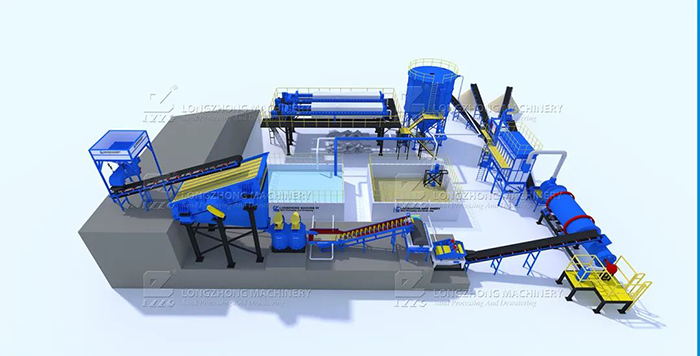
1. Core Equipment Investment (Basic Production Line)
A small production line typically requires the following basic equipment, which constitutes the majority of the initial investment:
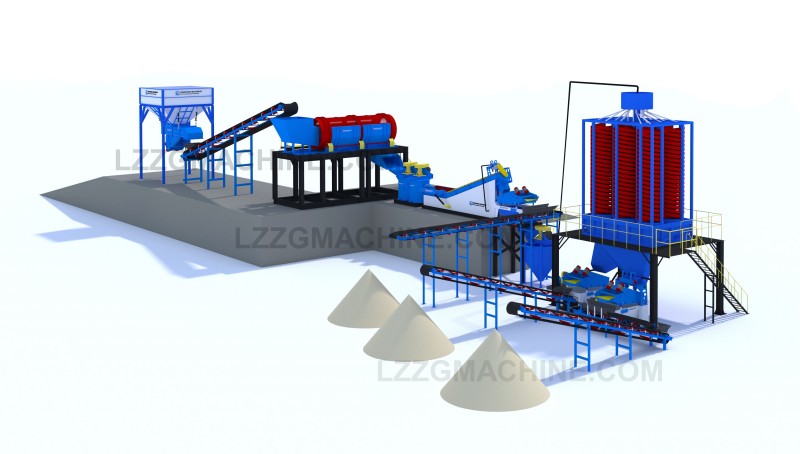
Crushing and Screening: Jaw crusher (coarse crushing), cone crusher (medium and fine crushing), vibrating screen (particle size classification).
Washing and Purification: Spiral washer (water washing to remove mud), acid washing tank (chemical purification, core process).
Dehydration and Drying: Centrifugal dehydrator, airflow dryer.
Finished Product Processing: Automatic packaging machine.
2.Environmental Protection and Safety Facilities Investment
The production of high-purity quartz sand involves processes such as pickling (usually using hydrochloric acid, hydrofluoric acid, etc.) and roasting, which have extremely high environmental protection requirements. In actual plant construction, the investment in environmental protection equipment often accounts for 10% or even higher of the total investment.
Wastewater Treatment: Construction of wastewater treatment plants for neutralization, defluorination, and sedimentation, and even a zero-discharge wastewater system.
Exhaust Gas Treatment: For exhaust gases generated from pickling and roasting, bag filters, two-stage alkaline spray towers, and other collection and purification devices are required.
Hazardous Waste Treatment: Waste acid and sludge generated from pickling are hazardous wastes, requiring the construction of a compliant hazardous waste storage room and regular disposal by a qualified unit.
3. Plant and Land:
Industrial land needs to be leased or purchased to construct raw material warehouses, finished product warehouses, production workshops (such as crushing workshops and pickling workshops), and a comprehensive building, etc.
4. Operating Costs:
Energy consumption, chemical reagents, and labor costs.