High-Weir Spiral Classifier vs. Submerged Spiral Classifier for Sand Washing
 December.03,2025
Different Spiral Blade Positions
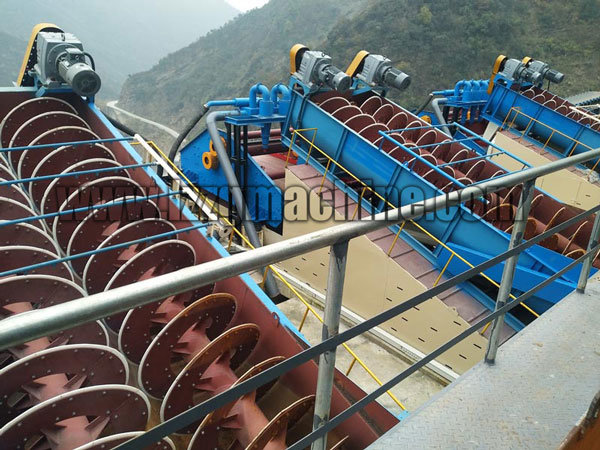
High-Weir Spiral Classifier: Its overflow weir is higher than the spiral’s rotation axis but lower than the upper edge of the spiral at the overflow end. There are single-spiral and double-spiral types. It has a larger settling area, and the weir height is adjustable, suitable for adjusting the classification particle size.
Submerged Spiral Classifier: The spiral blades at the overflow end are completely submerged in the slurry. It has a large settling area, a deep classification tank, and the spiral’s agitation has less impact on the slurry surface, resulting in a stable classification surface and a large, fine overflow.
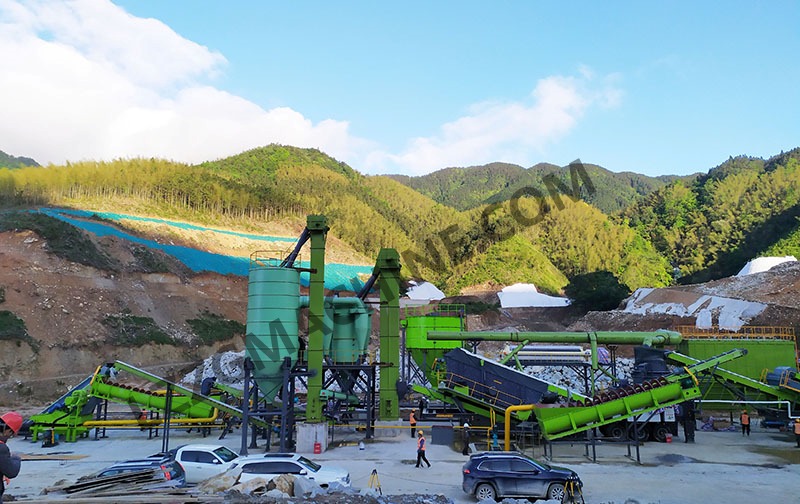
Differences in Classification Effect
High-Weir: Suitable for coarse-grain classification, typically used to separate minerals larger than 0.15mm, often used in the first stage of grinding. The area of its settling zone can be adjusted as needed to change the classification particle size.
Submerged: Suitable for fine-grain classification, typically used to separate minerals smaller than 0.15mm, often used in the second stage of grinding. Due to its stable classification surface, it is suitable for processing fine-grained slurries and has a high overflow output.
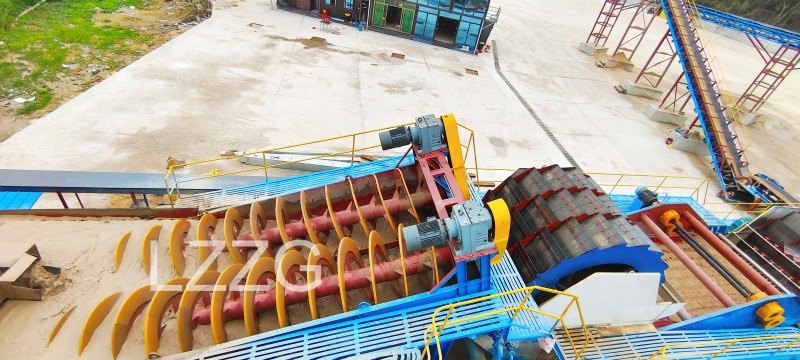
Differences in Application Scenarios
High-weir grinding: Commonly used in the first stage of grinding in mineral processing plants, suitable for processing coarse-grained minerals and effectively separating larger particles.
Submerged grinding: Commonly used in the second stage of grinding in mineral processing plants, suitable for processing fine-grained minerals and effectively separating smaller particles. Suitable for classification equipment in fine grinding or two-stage grinding.